About Dominica
Discover the Nature Island of the Caribbean – a land of volcanic wonders, pristine forests, and natural beauty


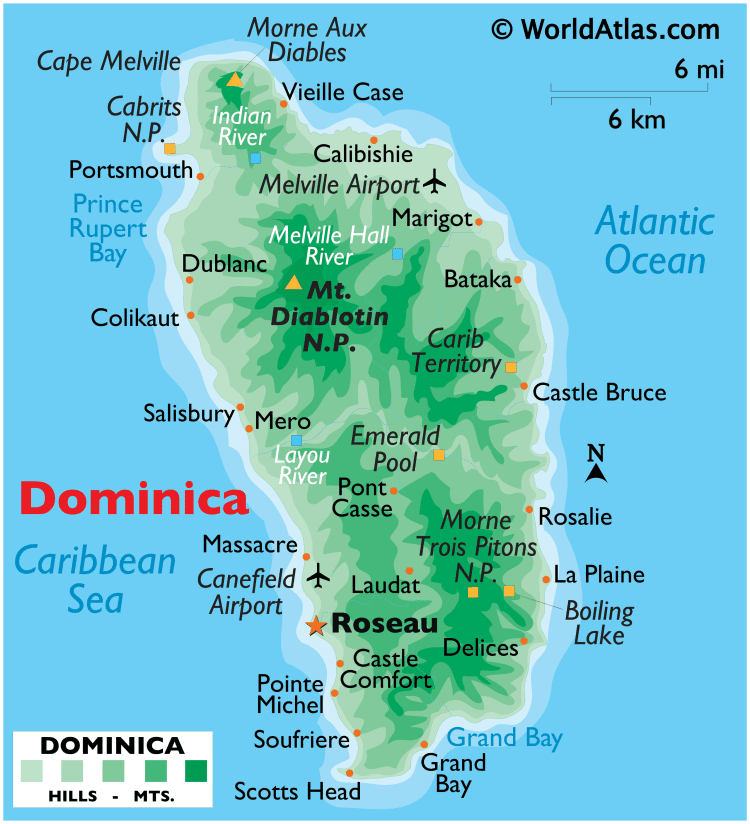
The island of Dominica, situated between the French Island territories of Guadeloupe to the north and Martinique to the south, is located at latitude 15 degrees 25 North of the Equator and longitude 61 degrees 20 West of Greenwich. With an area of 289.5 square miles and an abundance of rivers, waterfalls, and springs, Dominica promotes itself as the nature island of the Caribbean.
Compared to the other islands, which have one active volcano, Dominica has nine. Its volcanic nature accounts for the black sandy beaches, the second largest boiling lake in the world and sulphur springs which can be found in most villages.
Almost 60% of the island is covered with dense forest and woodland. The country enjoys subtropical conditions year-round and the months from June-December are known as the rainy season.
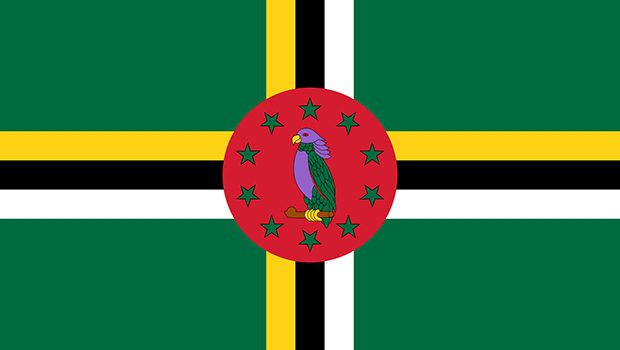
Dominica was first inhabited by the Carib Indians who named her Waitikubuli due to her length (46km), and then discovered by European explorer Christopher Columbus who renamed her Dominica as she was discovered on a Sunday. Dominica was colonized by the Europeans, mostly the French, and by Britain who took over in 1805 until Dominica gained independence on 3rd November 1978. With a parliamentary democracy style of government mirrored after the British system, elections are held every five years where a dominant party forms the government. The prime minister is the head of the government, and the President is the head of state, but his role is largely ceremonial.
Dominica’s economy has been described as vulnerable by commonwealth.org. This is due to its terrain and its location. It is largely mountainous which results in less than 25% of the island being cultivated. In addition, Dominica is very susceptible to hurricanes and tropical storms which in the past have destroyed and crippled the agriculture sector and destroyed key crops which make up most of the island’s economic base. For years the island had depended on agricultural crops such as bananas, sugar, and lime for much-needed revenue but given its vulnerability, there has been an increased effort by the government to diversify to tourism which is seen as more financially secure.
Dominica is prone to many natural hazards such as earthquakes, volcanoes, hurricanes, landslides, and floods. Many areas are highly susceptible to one or more of these natural hazards.
In at least every decade since the 1970s, Dominica has been affected by major tropical storms and hurricanes. Since 1978, the island has suffered the damaging effects of seven hurricanes. Three of which were Category 4 storms (Benson and Clay, 2004). In 2015, Dominica was severely affected by Tropical Storm Erika. Tropical Storm Erika resulted in total damage and loss of EC$1.3 billion (Commonwealth of Dominica, 2016). Due to its location in the tropics, Dominica is prone to the effects of tropical cyclones during the rainy, or hurricane, season which runs from June to November every year. Some hurricanes such as David in 1979 and Maria in 2017 proved to be particularly devastating to the island.
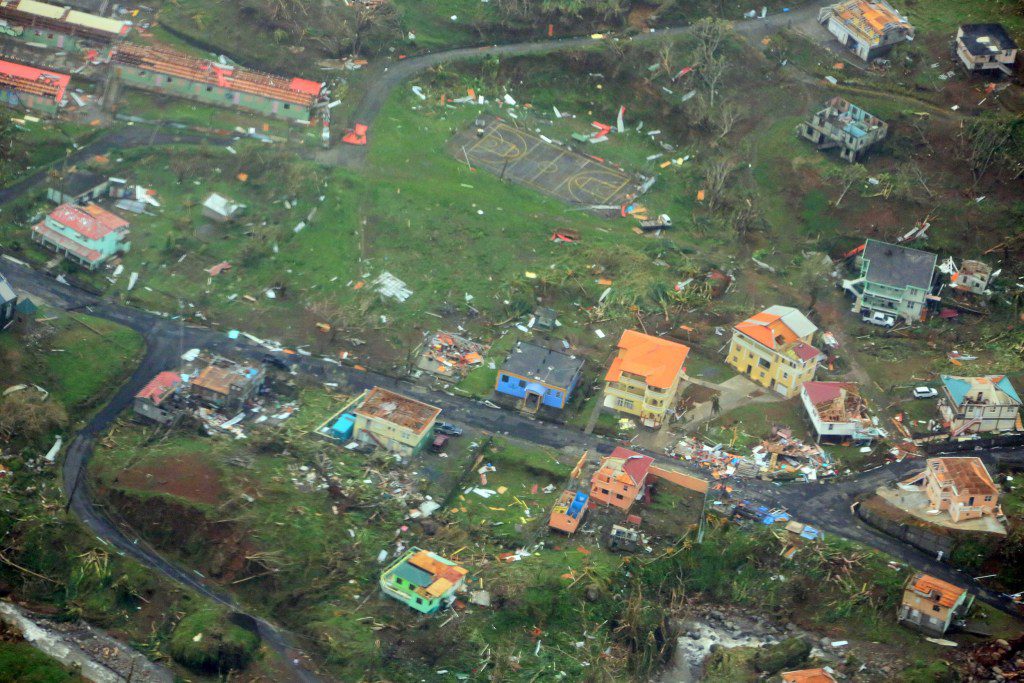
Hurricane Maria was Dominica’s most powerful and destructive storm in recent memory. Total damages surpassed XCD 2.5 billion (Van Western and Zhang 2017). The island’s housing stock was significantly impacted as well as businesses, farmland, and infrastructures. It was estimated that at least 60% of the tropical forest was damaged. In addition, 60 percent of the population was left homeless, and 39 deaths were reported. Highly intensive precipitation triggered widespread floods as well as a tremendous number of landslides. Nearly 10,000 landslides were recorded throughout the island with extensive topsoil loss (Van Western and Zhang 2017). According to the report, Dominica will face some new problems from mountain hazards in the coming years, as many of the fresh scarps could produce more debris. Debris could also come from tree trunks which are still on slopes or in the river channels. With so many fresh landslides in the upper catchments in nearly every watershed, it is likely that debris flows will be triggered with rainfall thresholds that are substantially lower than before the hurricane.
Landslides, inland flooding, and sea surges are hazards that are closely related to tropical cyclones and rainfall events in Dominica and the rest of the Lesser Antilles. Dangerous sea surges can also be triggered during a tropical cyclone. These events have become even more frequent in the past decade with an increase in periods of intense rainfall even outside of the hurricane season. The population and infrastructure such as roads, electricity transmission lines are usually affected. The islands of the Caribbean share a common set of features that include small size, steep inland topography restricting the land space available for development, and a heavy socio-economic dependency on the coastline and limited resources. These features enhance sensitivity to climate variability so that extreme events such as droughts and floods and hurricanes pose a very real threat to regional development.